SC refuses to cancel anticipatory bail granted to Swami Avimukteshwaranand in POCSO case
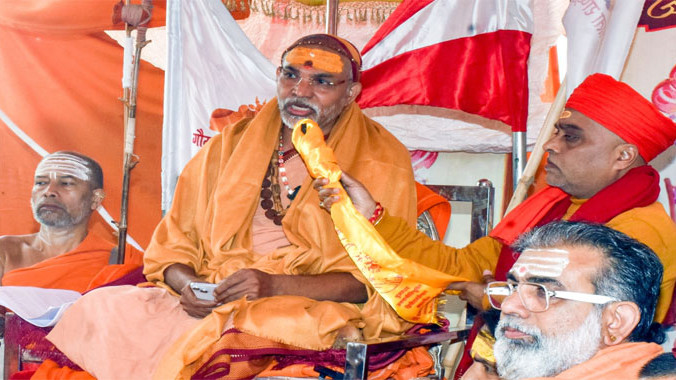
New Delhi, May 29 : The Supreme Court on Friday declined to interfere with the anticipatory bail granted to Jyotish Peeth Shankaracharya Swami Avimukteshwaranand Saraswati and his disciple Mukundanand Giri in connection with a child sexual abuse complaint registered by the Uttar Pradesh Police.
A Bench of Justices M.M. Sundresh and N. Kotiswar Singh dismissed the Special Leave Petition (SLP) filed by spiritual leader Ashutosh Brahmachari Maharaj, who had challenged the Allahabad High Court’s order granting anticipatory bail to the accused.
The apex court’s refusal to entertain the SLP means that the anticipatory bail granted by the Allahabad High Court to Swami Avimukteshwaranand and Mukundanand Giri will continue to remain in force.
Ashutosh Brahmachari had moved the Supreme Court against the order of the Allahabad High Court, which granted anticipatory bail to the Hindu seer and his co-accused in connection with a case registered at Jhunsi Police Station in Prayagraj under provisions of the Bharatiya Nyaya Sanhita (BNS) and the Protection of Children from Sexual Offences (POCSO) Act.
Granting relief, a single-judge Bench of Justice Jitendra Kumar Sinha had observed that, "considering the above factual matrix and without expressing any opinion on its merits, a case for grant of anticipatory bail is made out".
In its order passed on March 25, the Allahabad High Court had directed that in the event of arrest, the accused be released on anticipatory bail upon furnishing a personal bond of Rs 50,000 with two sureties each, subject to conditions, including cooperation with the investigation and non-interference with witnesses.
The relief order had recorded several inconsistencies in the prosecution case, including delay in lodging the complaint and contradictions in the statements of the alleged victims regarding the place and timing of the incidents.
It said that the first informant, who claimed to be the guardian of the victims, received information about the alleged offence on January 18, 2026, but approached the police only after a delay of six days, citing his engagement in "pooja/yagya".
The Allahabad High Court had also restrained the applicants, victims and the first informant from giving media interviews during the pendency of the investigation and trial.
The case stems from allegations of sexual abuse of minors under the POCSO Act based on a complaint filed by Ashutosh Brahmachari, following which a Special POCSO court directed registration of an FIR in February this year.
Earlier, on February 27, the Allahabad High Court had granted interim protection from arrest to Swami Avimukteshwaranand and directed the accused to cooperate with the ongoing investigation.
During the proceedings, the accused had claimed false implication, saying that there were inconsistencies in the statements of the alleged victims, delay in lodging the complaint, and absence of corroborative medical evidence.
Opposing the plea, the Uttar Pradesh government and the complainant said that the allegations were serious in nature and custodial interrogation was necessary, while also expressing apprehension that the accused could influence witnesses.
A Bench of Justices M.M. Sundresh and N. Kotiswar Singh dismissed the Special Leave Petition (SLP) filed by spiritual leader Ashutosh Brahmachari Maharaj, who had challenged the Allahabad High Court’s order granting anticipatory bail to the accused.
The apex court’s refusal to entertain the SLP means that the anticipatory bail granted by the Allahabad High Court to Swami Avimukteshwaranand and Mukundanand Giri will continue to remain in force.
Ashutosh Brahmachari had moved the Supreme Court against the order of the Allahabad High Court, which granted anticipatory bail to the Hindu seer and his co-accused in connection with a case registered at Jhunsi Police Station in Prayagraj under provisions of the Bharatiya Nyaya Sanhita (BNS) and the Protection of Children from Sexual Offences (POCSO) Act.
Granting relief, a single-judge Bench of Justice Jitendra Kumar Sinha had observed that, "considering the above factual matrix and without expressing any opinion on its merits, a case for grant of anticipatory bail is made out".
In its order passed on March 25, the Allahabad High Court had directed that in the event of arrest, the accused be released on anticipatory bail upon furnishing a personal bond of Rs 50,000 with two sureties each, subject to conditions, including cooperation with the investigation and non-interference with witnesses.
The relief order had recorded several inconsistencies in the prosecution case, including delay in lodging the complaint and contradictions in the statements of the alleged victims regarding the place and timing of the incidents.
It said that the first informant, who claimed to be the guardian of the victims, received information about the alleged offence on January 18, 2026, but approached the police only after a delay of six days, citing his engagement in "pooja/yagya".
The Allahabad High Court had also restrained the applicants, victims and the first informant from giving media interviews during the pendency of the investigation and trial.
The case stems from allegations of sexual abuse of minors under the POCSO Act based on a complaint filed by Ashutosh Brahmachari, following which a Special POCSO court directed registration of an FIR in February this year.
Earlier, on February 27, the Allahabad High Court had granted interim protection from arrest to Swami Avimukteshwaranand and directed the accused to cooperate with the ongoing investigation.
During the proceedings, the accused had claimed false implication, saying that there were inconsistencies in the statements of the alleged victims, delay in lodging the complaint, and absence of corroborative medical evidence.
Opposing the plea, the Uttar Pradesh government and the complainant said that the allegations were serious in nature and custodial interrogation was necessary, while also expressing apprehension that the accused could influence witnesses.